Bachelor of Dental Surgery
Keep your community smiling
Dentists work to improve oral health in our communities. They’re lifelong learners who care about their patients and their work.
Dentistry is a science and an art. It’s flexible and rewarding, and it changes lives.
What will you do?
Our Bachelor of Dental Surgery supports you in becoming a highly skilled and patient-focused dentist. You will:
- build clinical experience starting in your very first year
- learn in Australia’s newest dental teaching hospital, in the state-of-the-art Adelaide Health and Medical Sciences building
- explore the full range of dental therapies—from complex restorative to preventative-based treatments
- practise using equipment in our Dental Simulation Clinic
- tackle real-life case scenarios in teams
- benefit from extensive placements across metropolitan and rural settings
- improve lives through community outreach programs.
Where could it take you?
You could work in a local or community dental clinic or provide dental care for people in the developing world. You might become a defence force dentist. Perhaps you’ll be a researcher, making new discoveries to improve oral health care.
Note:
This degree is only available in blended mode and on-campus attendance is required. if you are a continuing student in the degree and are unable to attend campus, please contact your program coordinator for program advice.
^QS World University Rankings by Subject, 2024.
Thinking of studying soon?
Study at the new Adelaide University in 2026
The University of Adelaide and the University of South Australia are combining their strengths to create a new
university for the future, Adelaide University, opening in January 2026.
From 4 August 2025, the University of Adelaide and University of South Australia will no longer be acccepting
applications for new students.
Apply now to study with Adelaide
University in 2026.
Entry Requirements
Choose your applicant type to view the relevant admissions
information for this program.
I am a:
Domestic applicants
| SATAC Code | 314122 |
|---|---|
| Deferment | Yes - 2 year |
| Intake | February |
| Prerequisites | SACE Stage 2: two Science subjects: one chosen from Chemistry, Mathematical Methods, Specialist Mathematics, Physics; and one chosen from Biology, Geology, Chemistry, Physics; OR IB: two Science subjects (one of Chemistry, Mathematics: Applications and Interpretations (HL) or Mathematics: Analysis and Approaches (SL) or Physics AND one of Biology, Chemistry or Physics); OR equivalent University courses (i.e. 1st year Human Biology as part of the Bachelor of Health and Medical Sciences program). Subject prerequisites are applicable to all BDS entry pathways. MathTrackX is an online bridging program available as a recognised alternative to Mathematical Methods. |
| Assumed Knowledge | A necessary precursor for success is a high proficiency in the written and oral use of the English language. |
| Additional Entry Requirements | The Dental Surgery Admissions Guide - domestic applicants details important information regarding the additional entry requirements for entry at the University of Adelaide. All applicants are advised to read the Guide before applying for the Bachelor of Dental Surgery. Failure to read this document will not be grounds for special consideration. Application Process: There are two distinct parts to the application process:
Merit Ranking Process: Applicants will be ranked for an offer based on a combination of scores from these three components as follows:
Formal offers will be made by SATAC. However, to secure your place in the BDS degree, you MUST enrol in all first year courses for the BDS degree by the deadline stated in the SATAC offer letter. Supporting information regarding the above will be provided within your University Welcome email and the EnrolMe portal. Please note: the University reserves the right to make offers outside of the formal SATAC offer rounds until all places are filled. Offers can be made up to and during March. Entry pathway eligibility (including important how to apply information) is detailed in the Dental Surgery Admissions Guide - domestic applicants. Should you be ineligible for Dentistry, you may wish to consider alternative programs. Wirltu Yarlu Aboriginal Education administers the Aboriginal Access Scheme which offers Aboriginal and Torres Strait Islander Australians an alternative entry pathway to study at the University of Adelaide. For more information visit: adelaide.edu.au/wirltu-yarlu |
Selection Criteria
| Recent Secondary Education | Applicants with recent secondary education are those whose admission is primarily based on the completion of Year 12 within the last two years, however if you completed your secondary education more than two years ago, you may still be able to be considered on the basis of your secondary schooling. To be considered as a secondary school leaver, applicants must not have completed more than 2 years full-time (or part-time equivalent) university study (48 units) at an Australian or overseas institution. For full details of Tertiary Entrance Rules under the SACE/NTCE refer to the Tertiary Entrance Booklet published by SATAC (available at their website: www.satac.edu.au). Academic Score (ATAR). To meet the minimum academic threshold for entry into the Bachelor of Dental Surgery (BDS) program at the University of Adelaide, year 12 applicants (school leaver applicants) must achieve an Selection Rank (ATAR plus any applicable adjustment factors) of 90 or above, OR the equivalent International Baccalaureate score, OR the interstate/ overseas equivalent. Please refer to Additional entry requirements section for details of other entry requirements to the BDS program. |
|---|---|
| Higher Education Study | To meet the minimum academic threshold as a Higher Education applicant, you must have completed at least half a year full time equivalent higher education study, achieving at least a credit average (a Grade Point Average (GPA) of 5.0 or more). Higher Education applicants must also meet the prerequisite subject requirements (refer above). Please refer to Additional entry requirements section for details of other entry requirements to the BDS program. |
| Work and life experience | To be eligible to sit the Skills for Tertiary Admissions Test (STAT) as as pathway for entry, you must be 18 years or over before 1 February 2025. If you have studied at higher education level in the last two years (for 2024 entry this means you were enrolled in either 2024 or 2023), you must not have accumulated more than a TOTAL of 2 years full-time (or part-time equivalent) higher education study (ie. including any study prior to 2023). If you meet this criteria, you will be ranked according to your result in the Skills for Tertiary Admissions Test (STAT). Your STAT result is not weighted between verbal and quantitative components. STAT applicants must also meet the prerequisite subject requirements (refer above). |
| Other Entry Pathways | |
2024 Admissions Data for school leavers
| ATAR (raw ATAR, excluding any applicable adjustment factors) |
Lowest ATAR to receive an offer | 93.95 |
|---|---|---|
| Median ATAR to receive an offer | 99.05 | |
| Highest ATAR to receive an offer | 99.95 | |
| Selection Rank (ATAR plus any adjustment factors) |
Lowest Selection Rank to receive an offer | n/a |
| Median Selection Rank to receive an offer | n/a | |
| Highest Selection Rank to receive an offer | n/a | |
| Minimum eligibility score | 90 | |
| Additional criteria considered | Additional criteria | |
-
Admissions Transparency Data
Student Profile
Applicant background Semester one/Full year intake 2024 Number of students Percentage of all students (A) Higher Education study
(includes a bridging or enabling course)14 18.7% (B) Vocational education and training (VET) study n/a N/A (C) Work and life experience
(admitted on the basis of previous achievement not in the other three categories)N/A N/A (D) Recent secondary education: - Admitted solely on the basis of ATAR
(regardless of whether this includes the consideration of adjustment factors)
N/A N/A - Admitted where both ATAR and additional criteria were considered
(e.g. portfolio, audition, extra test, early offer conditional on minimum ATAR)
25 33.3% - Admitted on the basis of other criteria only and ATAR was not a factor
(e.g. special consideration, audition alone, schools recommendation scheme with no minimum ATAR requirement)
N/A N/A International students 36 48.0% All students 75 100.0% - Admitted solely on the basis of ATAR
Ready to Apply?
Find out more about the application process and start your studies at the University of Adelaide.
Be sure to check the critical dates to avoid missing application deadlines.
ApplyFees and Scholarships
Choose your applicant type to view the relevant fees and scholarships information for this program.
I am a:
Domestic applicants
| Indicative annual tuition fees |
Commonwealth-supported place: $13,245
|
Where the standard duration of the program is less than one year the full cost of the program is displayed.
More information on Student Contribution Amounts.
Scholarships
Scholarships are not only for high achievers—they are also available to provide students with an equal opportunity to study at university, no matter where they live or what their financial situation might be.
Scholarships are available to both new and continuing students. We encourage students to apply for any scholarships for which they may be eligible.
To browse scholarships offered by the University, visit: University Scholarships
To explore scholarships offered by organisations external to the University, visit: External Scholarships
Careers
Career Readiness
- Private practice: once students are registered with the Dental Board of Australia they can enter private practice on their own, work as an associate with an established practitioner, or join a partnership.
- Public sector: students can work as a dentist in government, and community or school-based dental clinics across Australia.
The University of Adelaide Careers Service prepares, inspires and empowers students to achieve successful career transitions and connect with industry.
Graduate Attributes
The objective of this program is to produce graduates with specific attributes as outlined in University of Adelaide Graduate Attributes.- Deep discipline knowledge and intellectual breadth
- Creative and critical thinking, and problem solving
- Teamwork and communication skills
- Professionalism and leadership readiness
- Intercultural and ethical competency
- Australian Aboriginal and Torres Strait Islander cultural competency
- Digital capabilities
- Self-awareness and emotional intelligence
Industry Placement
Professional Accreditation
To be eligible to work in Australia as a dentist, graduates are required to register with the Australian Health Practitioners Regulation Agency (AHPRA) and the Dental Board of Australia on the completion of the degree. In order to register, all applicants must comply with the English language skills requirements as determined by AHPRA. For further details, visit ahpra.gov.au/Registration.aspx
The Bachelor of Dental Surgery qualification is recognised by:
- The Dental Board of Australia. Once registered, graduates are also eligible for membership of the Australian Dental Association.
- The Dental Council of New Zealand under the Trans-Tasman Mutual Recognition Agreement.
- The Commission of Dental Accreditation of Canada. Further examinations are necessary to work in Canada.
- Singapore Dental Council
Potential careers
Graduates of this program have gone on to roles such as:
Dental Practitioner; Dentist
Degree Structure
The focus of the degree is to emphasise a holistic, preventive-based approach to oral health care, with a minimally invasive approach if restorative treatment is required. Students will be expected to apply and integrate knowledge and understanding of relevant biological and medical sciences in managing their patients and demonstrate high levels of professionalism, including an ability to effectively monitor their performance and a desire to continue to learn and grow as a member of the dental profession.
The dynamic curriculum uses a case-based learning approach to integrate learning across disciplines. The emphasis is on learning relevant scientific information throughout the degree at the same time as the development of clinical skills.
From first year, students will undertake compulsory clinical placements in a range of settings, including a city-based dental hospital and community dental clinics located in metropolitan Adelaide, rural South Australia and interstate.
Example Study Plan
| Year 1 | DENT 1005AHO / DENT 1005BHO Dental Science and Practice I Parts 1 & 2 | |||
|---|---|---|---|---|
| Year 2 | DENT 2005AHO / DENT 2005BHO Dental Science and Practice II Parts 1 & 2 | |||
| Year 3 | DENT 3005AHO / DENT 3005BHO Dental Science and Practice III Parts 1 & 2 | |||
| Year 4 | DENT 4004AHO / DENT 4004BHO Dental Science and Practice IV Parts 1 & 2 | |||
| Year 5 | DENT 5005AHO / DENT 5005BHO Dental Science and Practice V Parts 1 & 2 | |||
Further information
All courses are compulsory. The Bachelor of Dental Surgery does not contain elective courses.
Year 1
From a patient-centred care focus, this stream introduces students to the practice of dentistry and provides a foundation for understanding the normal structure and function of a healthy body. This includes the oral cavity, evidence-based maintenance of patients' health and dentistry as a career. By working through a series of integrated learning activities, students develop an integrated knowledge base related to evidence-based patient care and related biodental, clinical and behavioural sciences, clinical skills and professional behaviours. These integrated learning activities provide small-group discovery experiences (SGDE) for students by presenting various practice situations that focus on the initial phases of patient care. Student learning from these SGDE involve development of research skills and are supported by class meetings, laboratory, tutorial and simulation and clinical exercises. Learning is also supported by independent study and discussion of findings in class. Students work in a collaborative environment to learn to critically evaluate themselves, and plan and implement strategies for improvement.
Year 2
Second year builds on first year, maintaining the focus on patient-centred care. The aim is to develop an understanding of the changes that occur in the oral cavity when an imbalance of the oral ecosystem develops. The emphasis will be to restore and maintain the balance towards health. As in first-year, students’ SGDE involve participation in integrated learning activities, supported by class meetings, laboratory, tutorials, simulation and clinical sessions and independent study. Second year continues the emphasis on a scientific basis of dentistry by integrating research-informed knowledge of the structure and function of body with an emphasis on developing systematic scientific skills to examine, assess risk and systematically manage healthy patients with minor conditions.
Years 3 & 4
Students will extend their Dental Sciences studies to include the understanding of dental disorders and the human diseases which have direct relevance to oral health and dental practice. The scientific basis of dental practice, and the health and the community components will continue throughout the year. Students clinical skills in comprehensive treatment planning will be developed further through the provision of supervised care for patients in both general dental practice and dental specialities. As in previous years, students’ SGDE involve participation in integrated learning activities, supported by class meetings, simulation and clinical sessions and independent study
Year 5
In fifth year, students integrate the knowledge gained from the previous four years of study and consolidate their clinical skills in a range of settings in order to develop as dental professionals and manage patients with an increasingly complex range of dental problems.
Assessment
A range of assessment formats are used throughout the program. Assessment consists of examinations that may be in the format of written papers using a range of question formats or clinical assessments. There is also continuous self-monitoring of clinical performance and tutor feedback during each clinic or simulated clinic session. At the end of a clinical placement period, tutors complete summative assessments of clinical performance. Other forms of assessment during the semester include Tests of Understanding, assignments, and participation in small group tutorial sessions.
Related Degrees
Testimonial
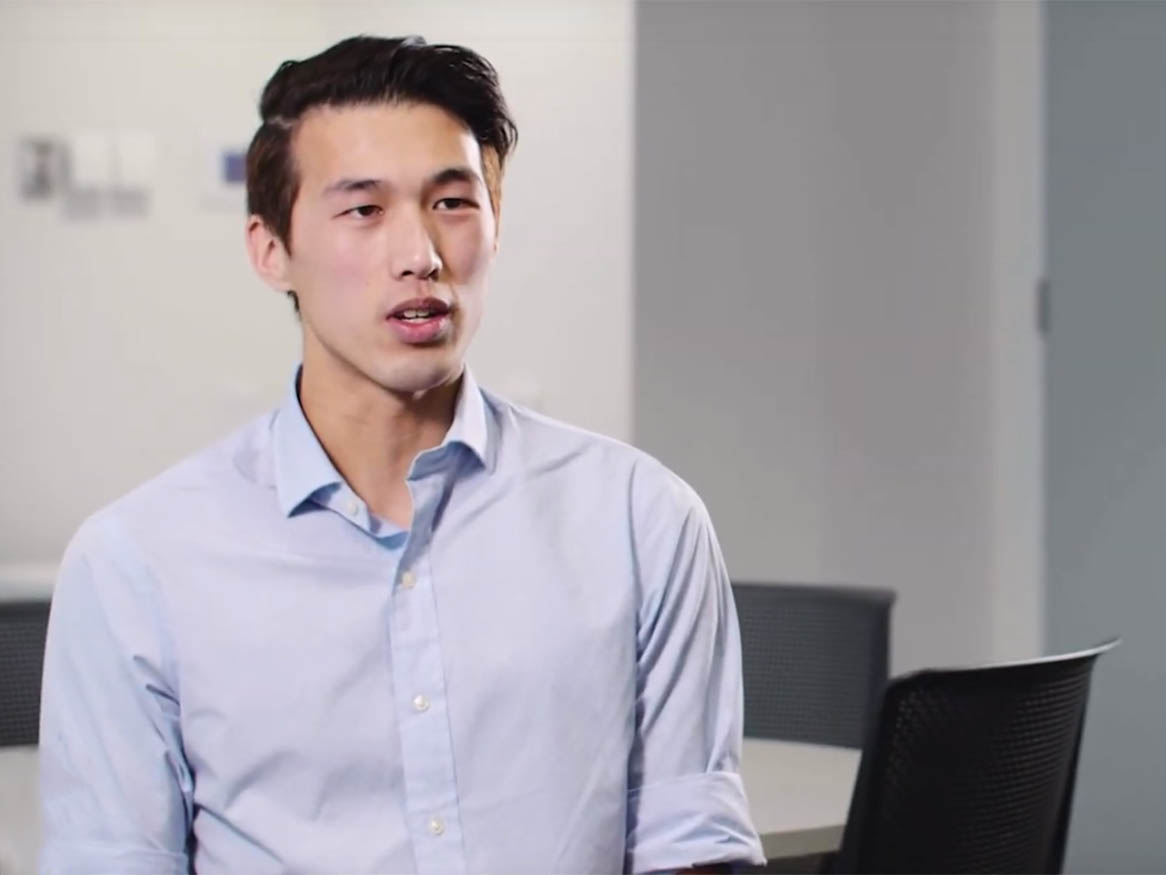
If you like science and you like using your hands, then dentistry is a great career for you.
The University of Adelaide is committed to regular reviews of the courses and programs it offers to students. The University of Adelaide therefore reserves the right to discontinue or vary programs and courses without notice. Please read the important information contained in the disclaimer.
Last updated: Thursday, 23 Jan 2025


